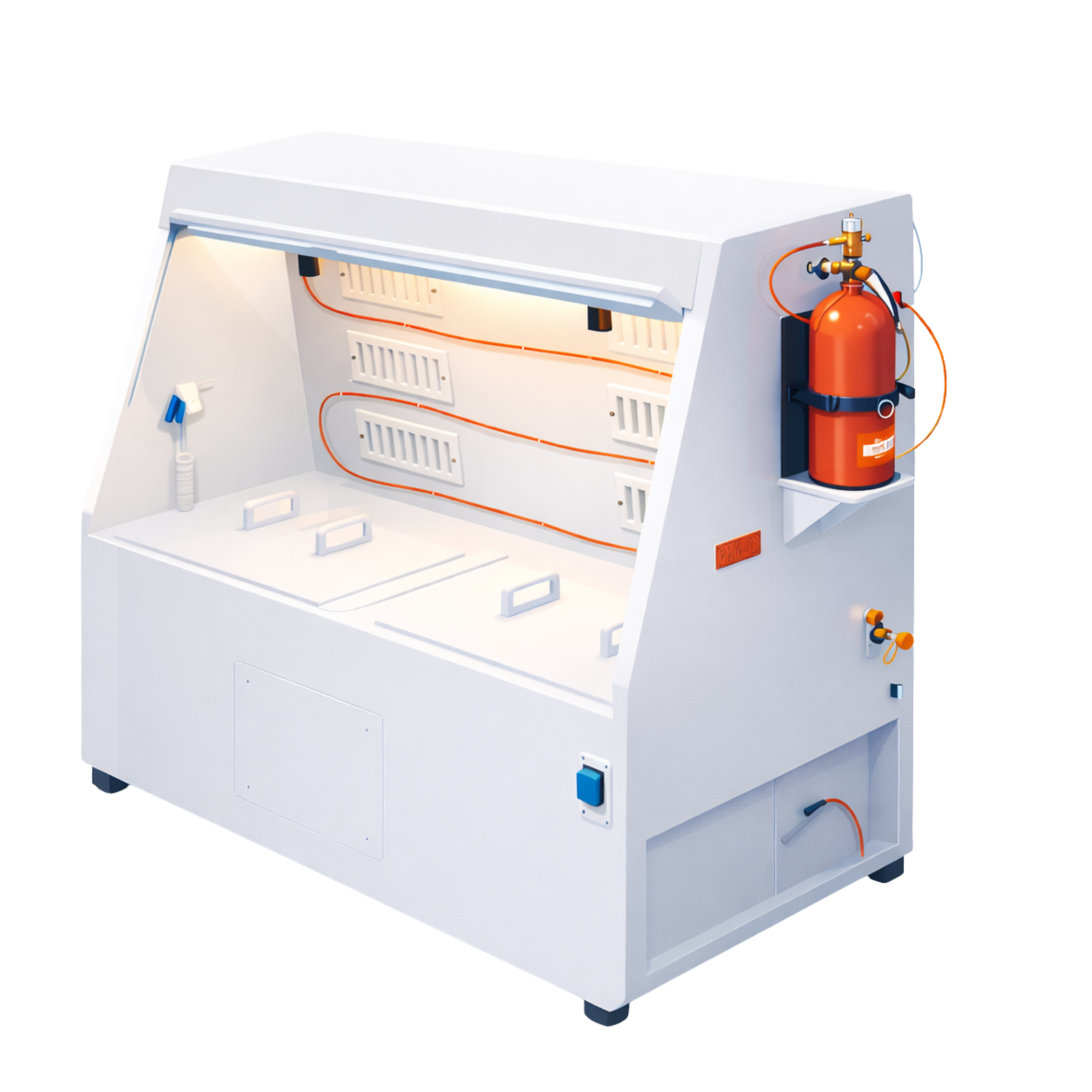
Fume hoods contain laboratory processes involving flammable liquids, reactive chemicals, and ignition sources within a ventilated enclosure, creating conditions where fires can develop rapidly if not controlled. .
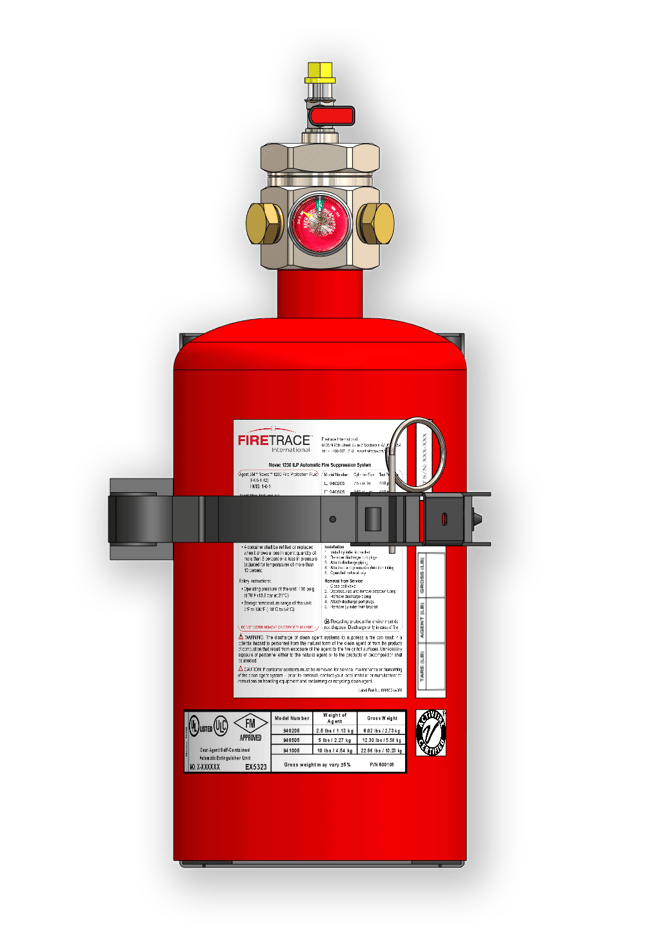
Firetrace systems detect and suppress fires at the source, helping prevent escalation while minimizing damage to the fume hood, laboratory assets, and surrounding operations.
The hood chamber (enclosure) is the primary working area of a fume hood, designed to contain and ventilate hazardous fumes, vapors, and chemical processes.
Fires can start here because flammable materials and active work processes are concentrated in a confined space where heat, vapors, and ignition sources can come together.
Volatile chemicals can release vapors that form ignitable mixtures with air inside the hood. If concentrations reach the flammable range, ignition can result in a fire.
Hot plates, open flames, electrical equipment, and static discharge can ignite vapors or reactive materials. These are common and often necessary tools used inside the enclosure.
Continuous airflow introduces oxygen and can intensify combustion. It can also carry flames and hot gases deeper into the hood or duct system.
Firetrace detects fires at the source using proprietary heat detection tubing.
The Firetrace system activates automatically, providing protection even when no one is around.
Firetrace systems suppress fires in seconds using the optimal technology for each specific application.